by William Matthews
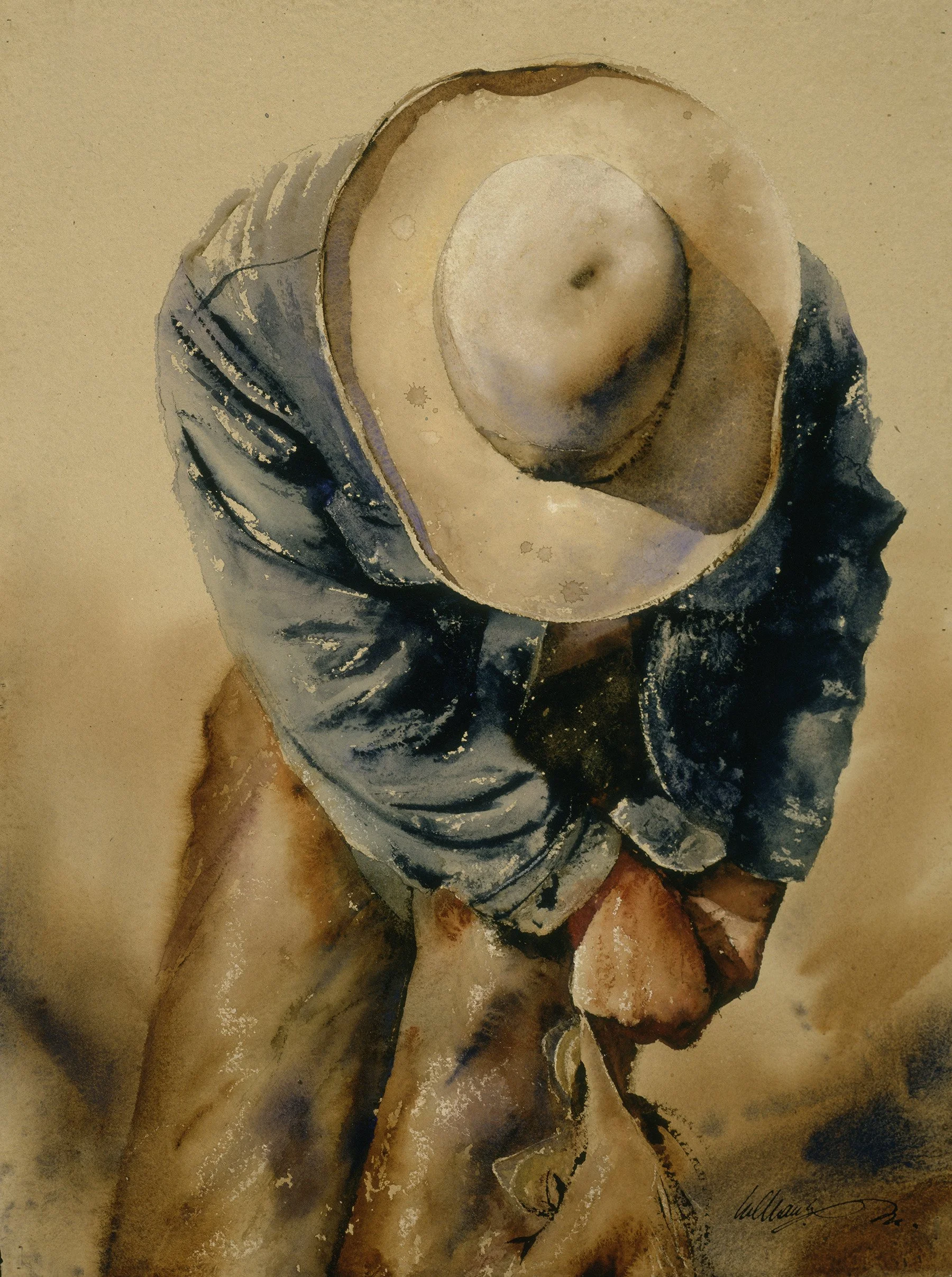
William Matthews, Chap Snap
Kurt Markus invited me to the first Cowboy Poetry Gathering in 1985.* He was the assistant editor at Western Horseman magazine, and had taken it upon himself to document the buckaroo community in Northern Nevada. His photographs touched something raw and emotional in me. Kurt and I had become good friends, and he thought that this might be an interesting event, though no one knew what to expect. A group of cowboys, assembled to recite poetry and tell stories, had never been done in this way before. Little did Kurt know that it would alter the course of my life.
I couldn’t get there for the first one, but I was there for the second and I hardly ever missed another Gathering. I instantly became great friends with Hal Cannon, the Utah folklorist who had organized the first Cowboy Poetry Gathering with help from several friends. I also met Waddie Mitchell, a cowboy poet I had recently seen on Johnny Carson’s Tonight Show, with Baxter Black. Waddie was working as the manager of the Church Ranch in Jiggs, Nevada, and he invited me to come out for a visit.
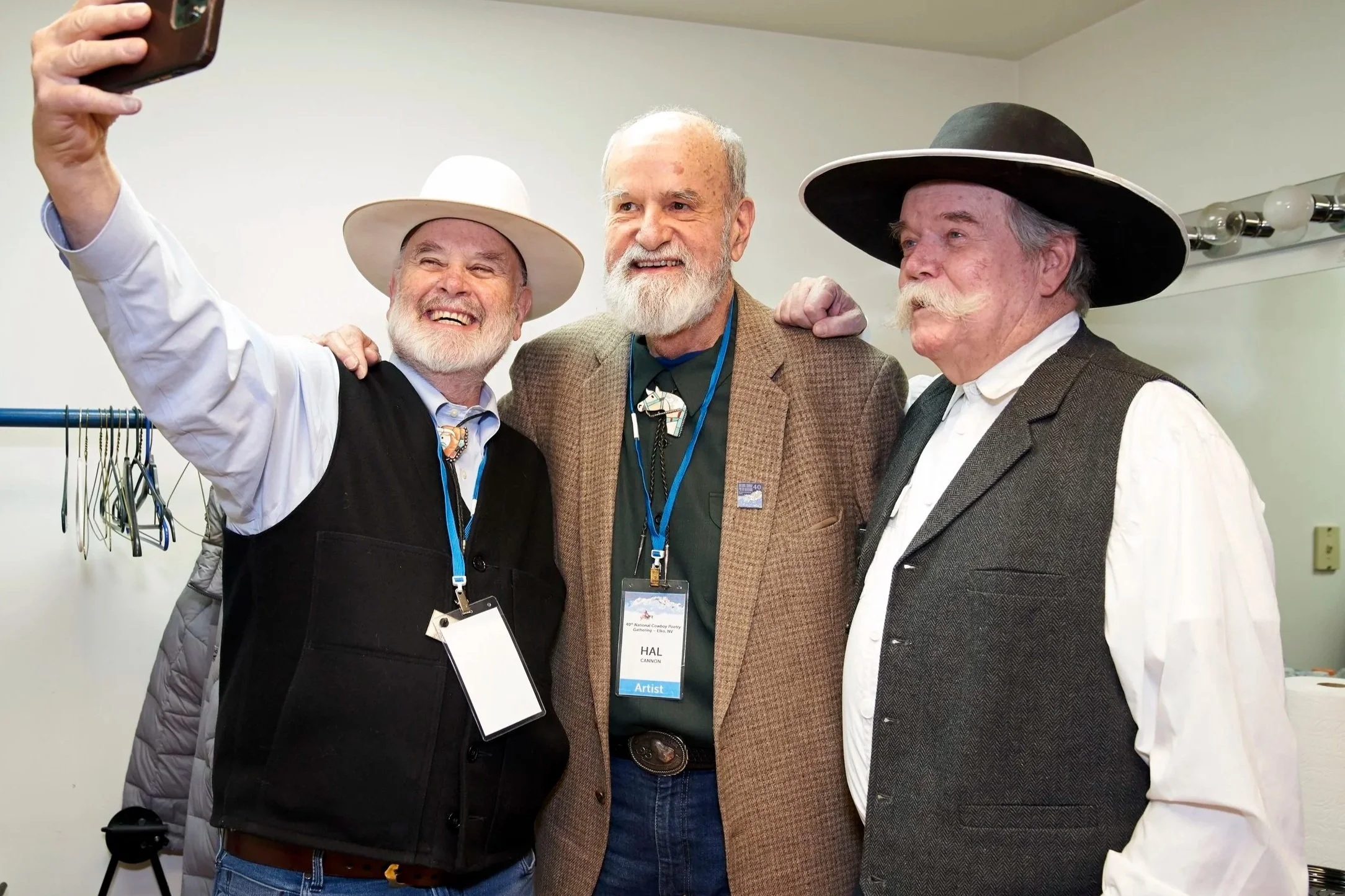
Willy, Hal, and Waddie at the 40th Gathering. Photo by Marla Aufmuth
I’d never been to a working ranch before, but I immediately fell into the rhythm of it all. I watched Waddie’s wife Tootie wake up at 3:30 in the morning to cook fresh bread for the crew, while also raising her five young children. There were six hungry men at the breakfast table that first morning, and I watched Buffalo McCormick gently dab his bacon for the extra grease, as he was watching his cholesterol. I had some watercolor paint with me, and I asked a couple of the men to sit while I painted their portraits, which they reluctantly agreed to do. I realized that this was not going to work in the long run. I’d be better off photographing and using the photographs as reference material.
When I landed in Elko County, I met cowboys and ranchers who understood history. They respected the old ways and preferred a good pony to an ATV. Some fed with horse-drawn teams in the winter, because that was the most reliable way to get the work done. And often the trucks were temperamental at 20 degrees below. I met men who lived out in cow camps, a hundred miles and four gates from town. They needed to be self-sufficient, which had always been a value of mine. They could rebuild a truck engine, reroof a house, doctor a calf, and cook a mean stew. And still trot out at dawn.
“But it was never as much about cowboying and ranching, as it was about the men and women I admired, and the hours of work they put in to raise cattle.”
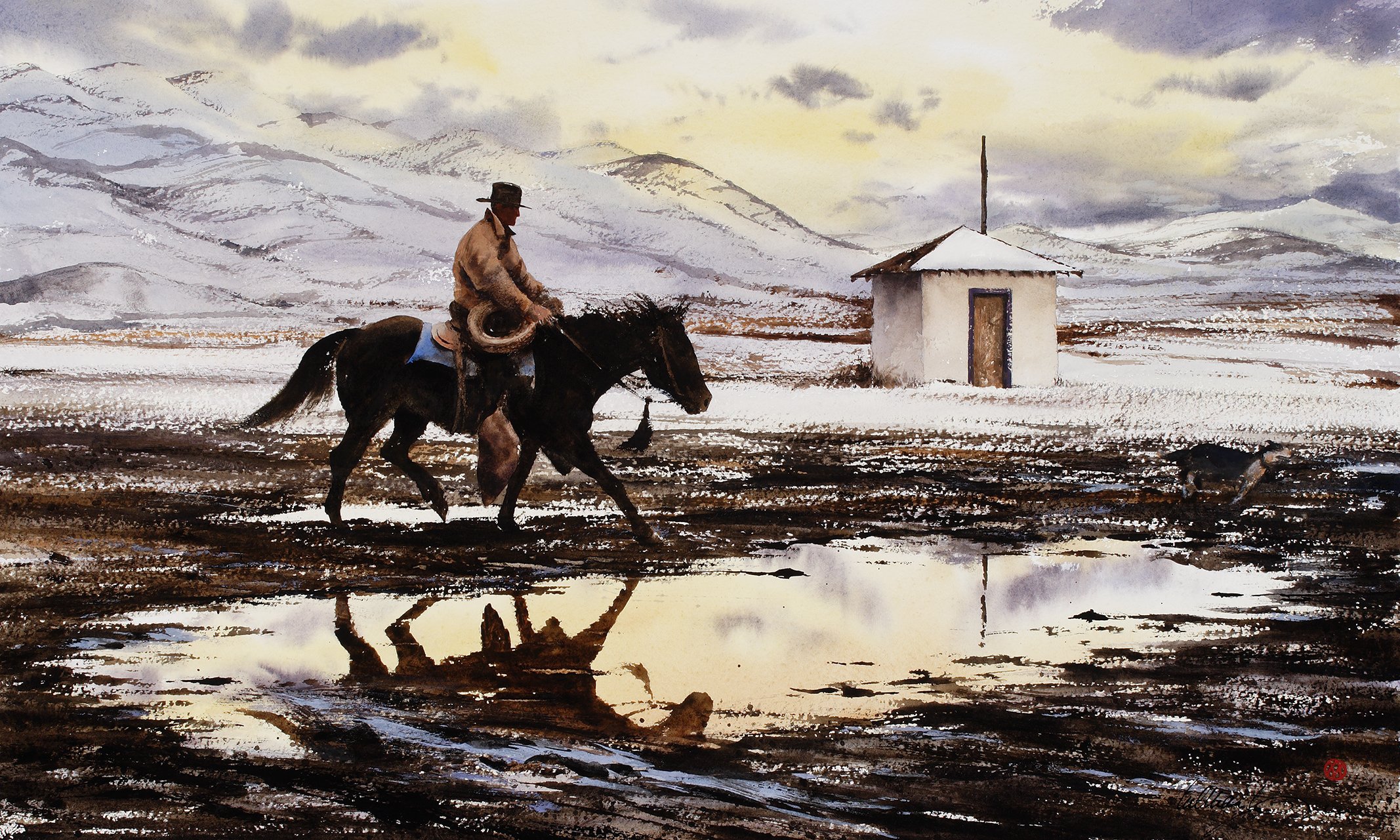
That was 40 years ago, and it started a long trajectory of painting the cowboys of Elko County. Over these years, I’ve gotten to know most of the great ranches and several generations of cowboys, painting some families over and over again. Some might accuse me of being a “Western artist.” And my paintings of the West are among my most recognizable. But it was never as much about cowboying and ranching, as it was about the men and women I admired, and the hours of work they put in to raise cattle. I've traveled all over the world and met many amazing people, but this cowboy community certainly holds its own.
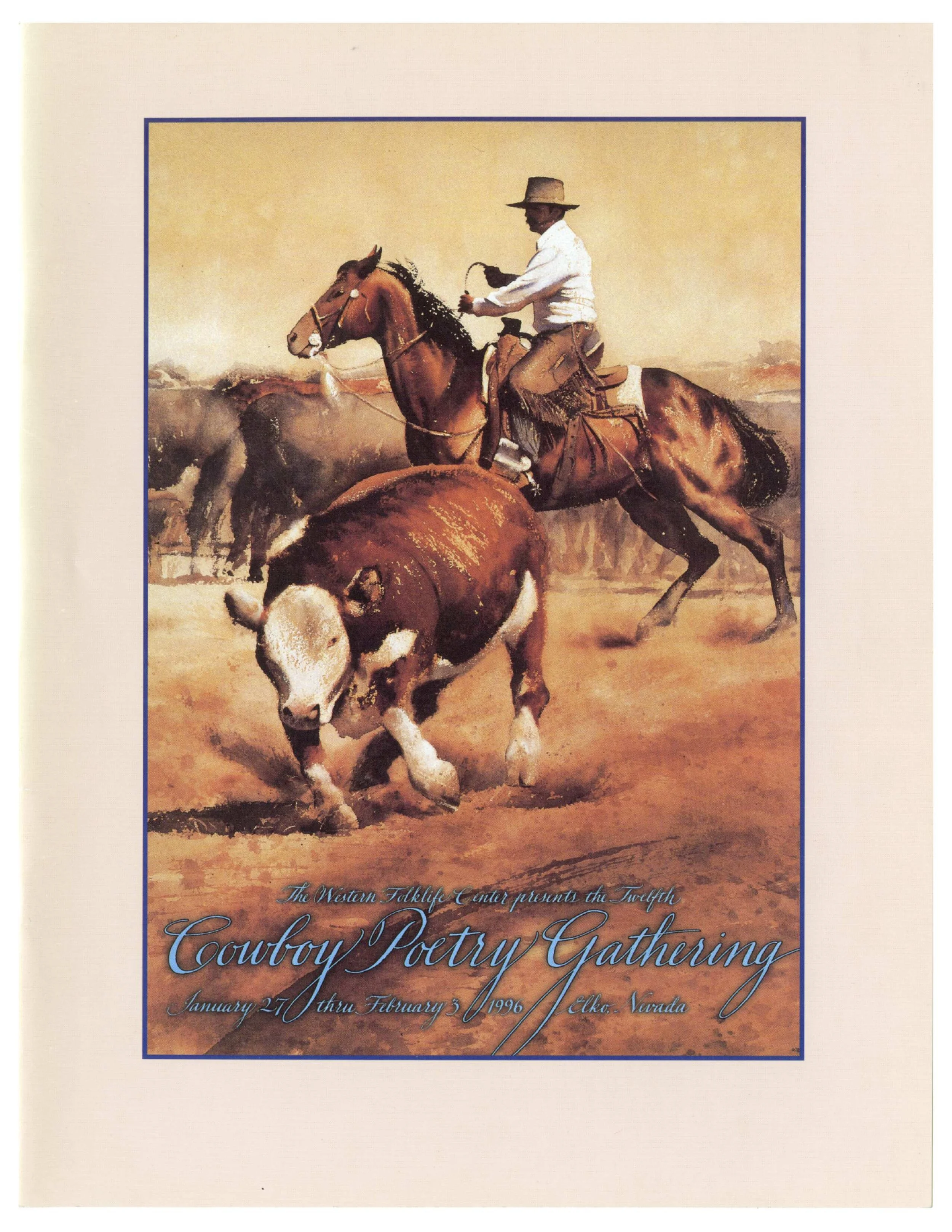
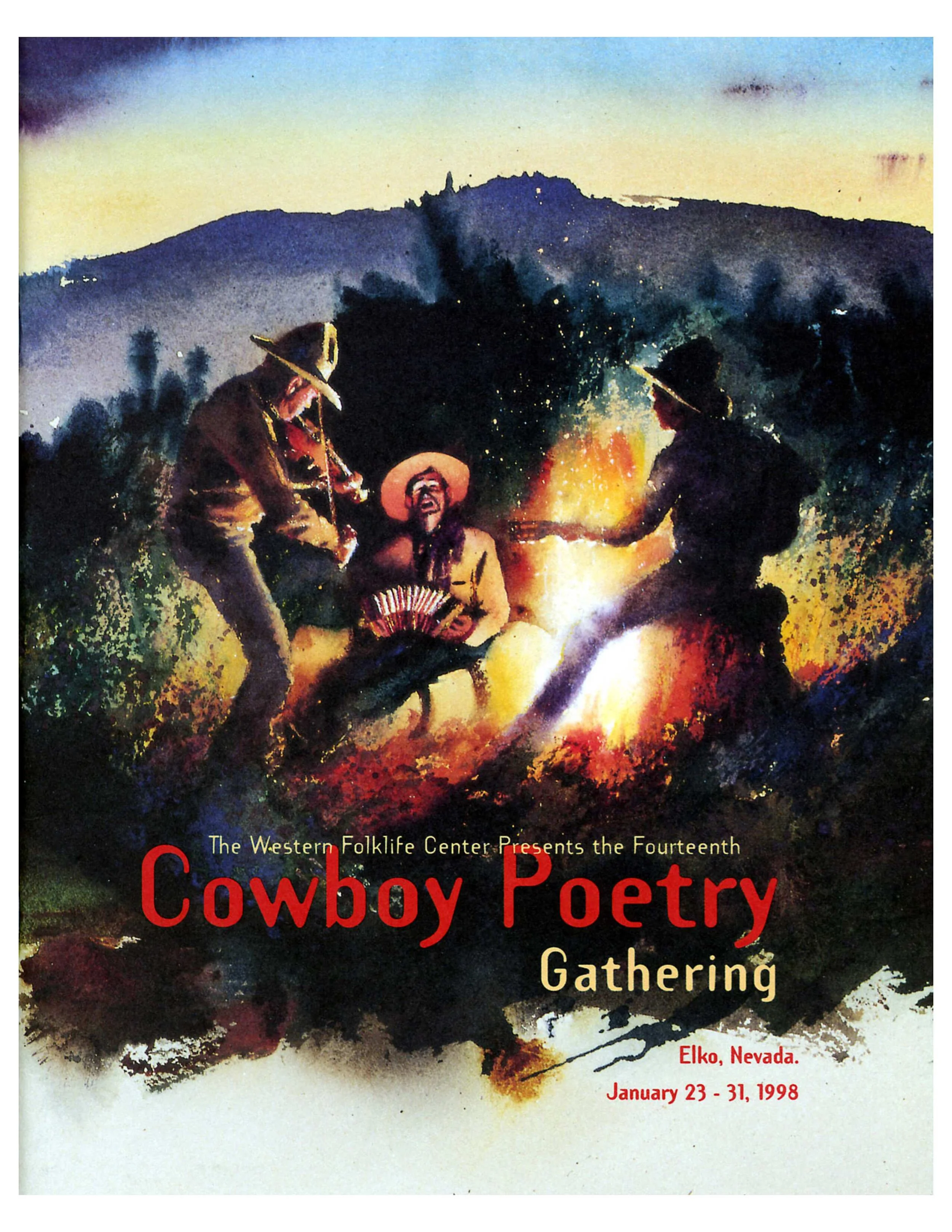
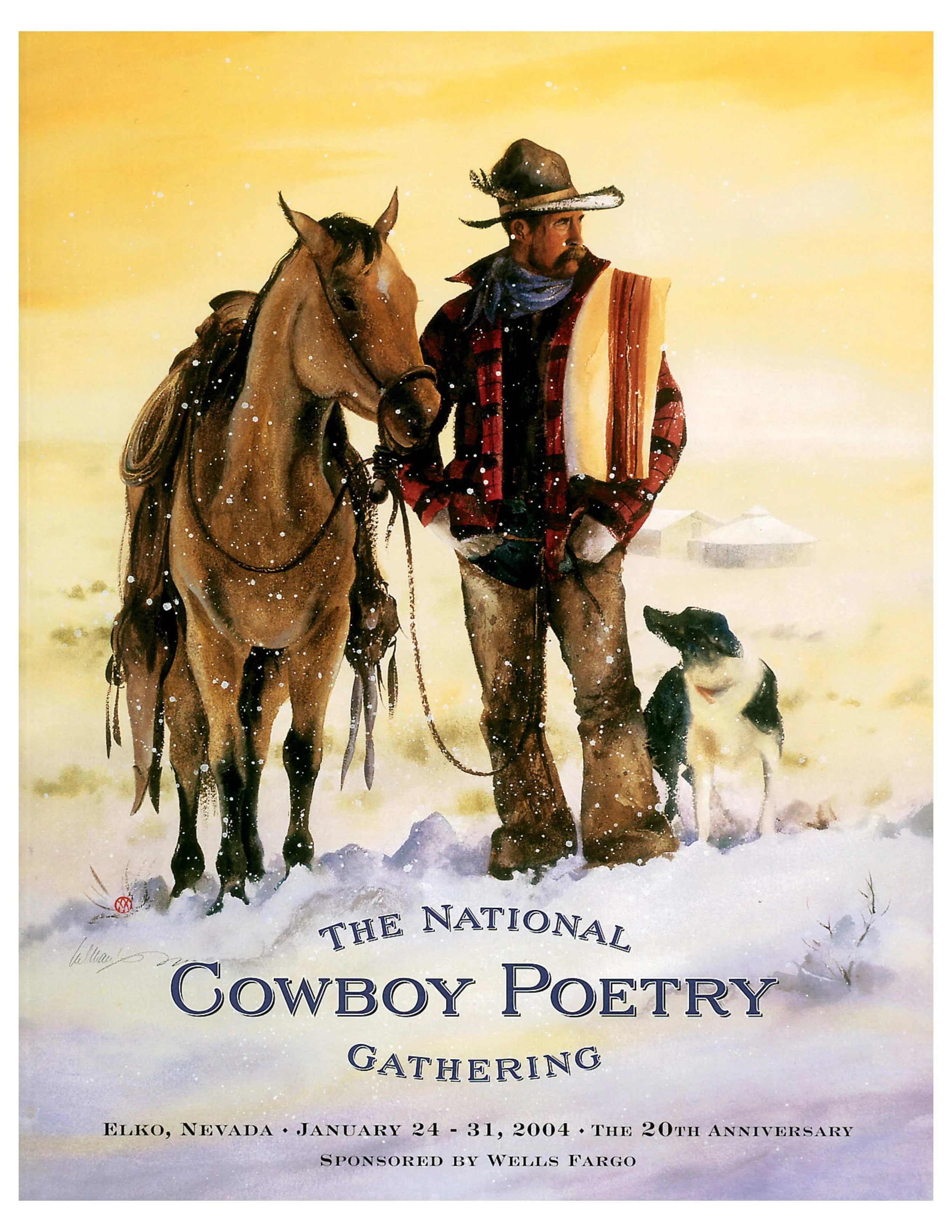
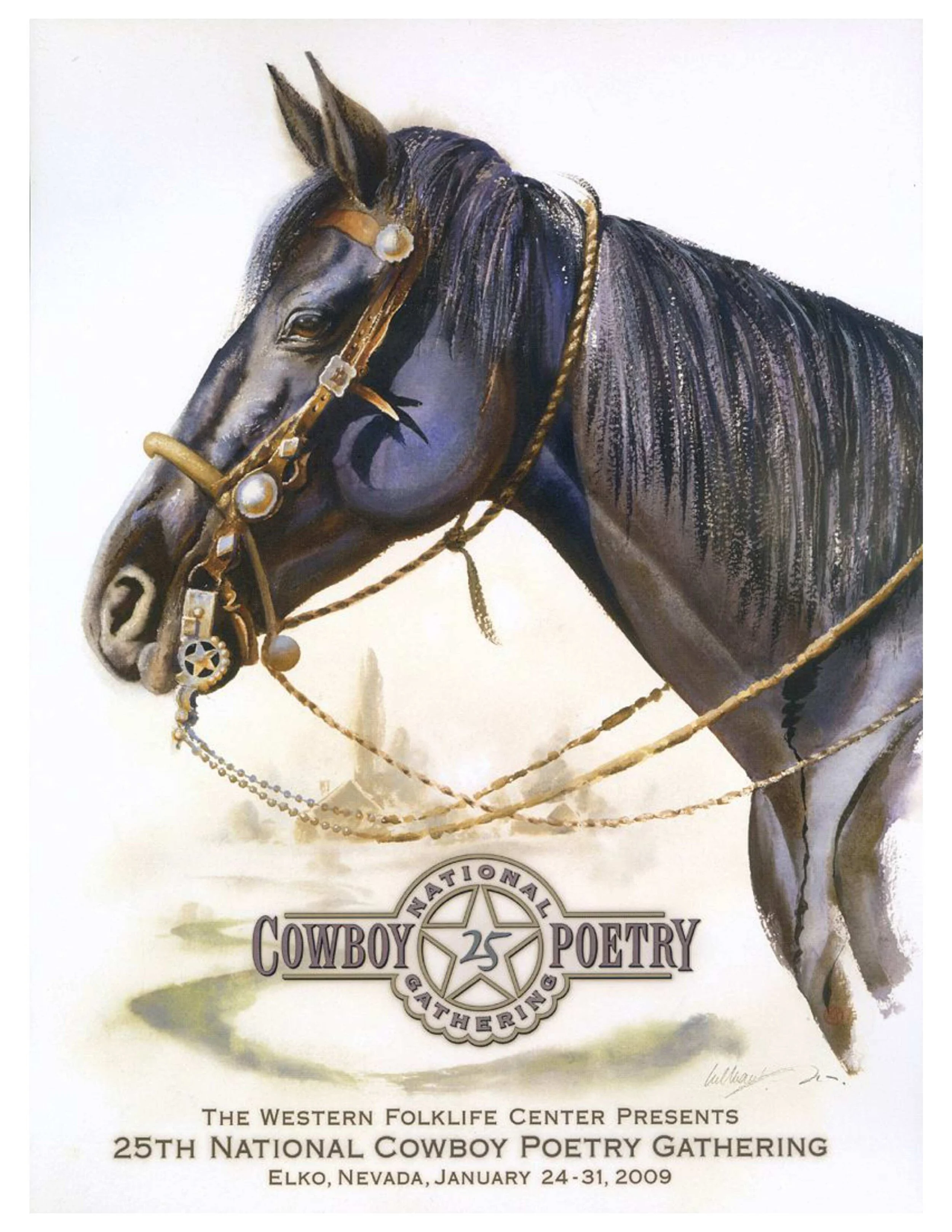
I've been involved with the (National) Cowboy Poetry Gathering and the Western Folklife Center since the beginning, and it has shaped me. Besides having painted and designed a number of the posters over the years, I've also painted a number of the backdrop murals.** I’ve done album covers for many of the performers, and had exhibitions of my paintings in the Western Folklife Center’s Wiegand Gallery and the Northeastern Nevada Museum. I’ve taught watercolor workshops at the Gathering and even painted on stage, while Hal Cannon’s band performed.
I never intended to paint cowboys. For years, I had a graphic design firm, painting landscapes on the side, and I was slowly making the transition into painting full-time. So getting to know this community has been an extraordinary chapter in my life, and it has become my touchstone.
*In 2000, the event was renamed the National Cowboy Poetry Gathering by an official act of Congress.
**Willy’s art is featured on the posters from the 12th (1996), 14th (1998), 20th (2004), and 25th (2009) Gatherings. He also designed the National Cowboy Poetry Gathering logo.

Photo courtesy of William Matthews
William (Willy) Matthews represents subjects both natural and human with watercolors, mixed media, and masterful artistry. He himself is represented as the subject of three books and a documentary film. While the people of the American West aren’t his only muse, they may be the ones who have moved him the most.
Originally published in the program book for the 41st National Cowboy Poetry Gathering as a companion to William Matthew’s keynote address.